Rachel Reeves’ Budget Weighs Brexit’s £200 Billion Cost as UK Trade Ties Fray

- Nov, 28 2025
- 0 Comments
- Kendrick Fairway
When Rachel Reeves stepped into the House of Commons on November 28, 2025, she didn’t just present a budget — she confronted a decade of economic erosion. The National Bureau of Economic Research had just released findings suggesting the UK economy is 6–8% smaller than it would have been had Britain stayed in the European Union. That’s not a theoretical loss. It’s £90 billion to £200 billion vanished — enough to fund the NHS for over two years. And the pain isn’t abstract. It’s in the factories, the shipping ports, the boardrooms where managers now choose to relocate rather than wrestle with red tape.
How Brexit Is Quietly Hollowing Out British Business
A study of 7,000 British firms, conducted by an international team of economists and timed to influence Reeves’ budget, painted a grim picture. Companies trading with the EU reported lower trade volumes, reduced earnings, and fewer employees. One firm’s growth rate dropped by 5–6% — a “micro” hit that stacked into a “macro” national drag of 6–8%. The Office for Budget Responsibility had estimated £100 billion in annual losses. This new data doubles that. And it’s not just about tariffs. It’s paperwork. Delays. Compliance costs. Uncertainty. John Springford of the Centre for European Reform called the firm-level data “especially significant.” Why? Because it isolates Brexit’s damage — even after accounting for the 2022 energy crisis, inflation, and global supply chain shocks. This is pure Brexit cost. Bertie van Wyk, senior strategist at MillerKnoll, the world’s largest office furniture maker, didn’t mince words. “Red tape is a big issue,” he said at the Confederation of British Industry conference. “Leaving the EU has been a massive problem for us. We’re employing fewer people here, and more there.” MillerKnoll isn’t alone. Dozens of firms have shifted operations to Poland, the Netherlands, or Germany — not because they want to, but because they have to.The Double Bind: Rising Spending, Stagnant Revenue
Reeves isn’t just fighting ghosts. She’s wrestling with hard numbers. Since 2019, tax revenues have climbed just 2%. Government spending? Tripled. Meanwhile, the UK’s cost of borrowing — the interest rate the government pays on its debt — is the highest in the G7. That’s not sustainable. It’s not even close. Sir Nick Harvey, CEO of European Movement UK, put it bluntly: “Reeves would be facing very different choices this week if the UK hadn’t mangled its ties to its biggest trading partner.” He’s not calling for a second referendum. He’s calling for pragmatism. “A customs union with the EU is the single biggest lever this government could pull to turbocharge the UK economy.” And yet, political will remains fractured. The Conservative Party still clings to sovereignty slogans. Labour’s internal factions are divided. Reeves has no easy path — only painful ones.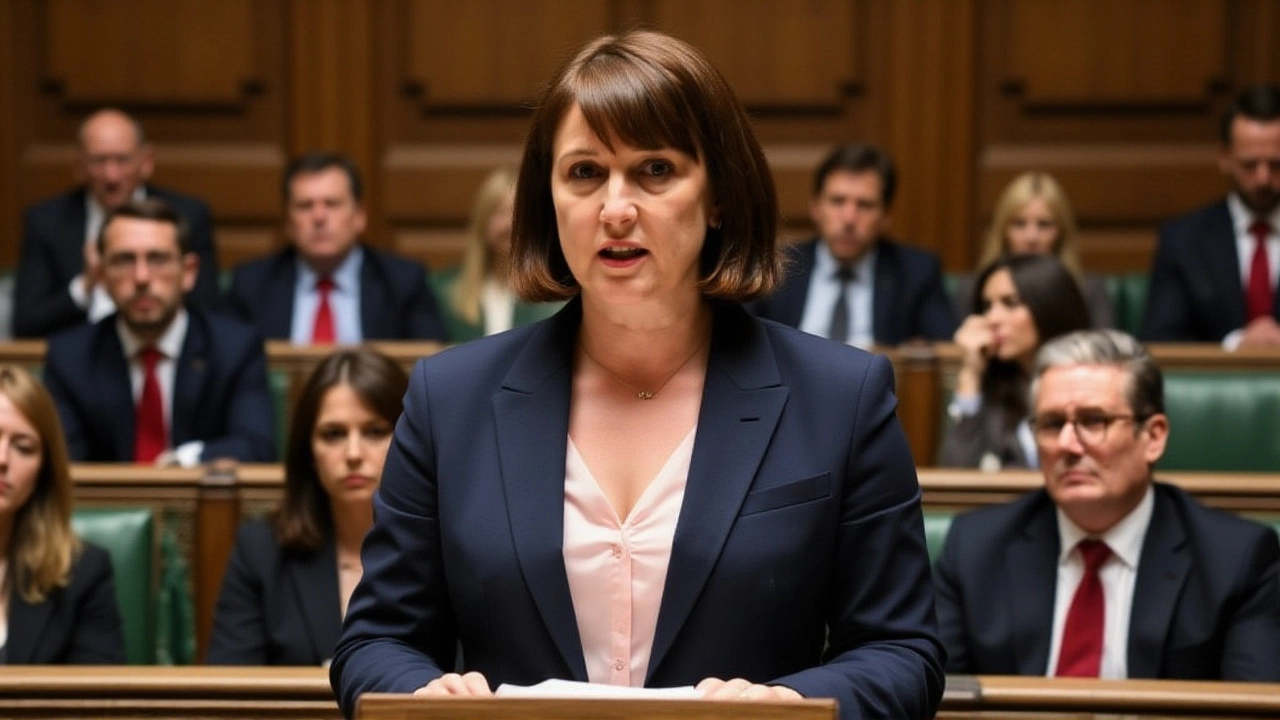
Trade Wars, Tariffs, and Broken Promises
While Britain struggles with its own fallout, global trade dynamics are shifting — and not in its favor. On July 27, 2025, Ursula von der Leyen and Donald Trump struck a deal in Scotland to cap US tariffs on EU goods at 15%. That deal took effect August 7. But here’s the twist: the EU secured a 15% tariff on cars — with no quota limits. The UK? Still stuck with a 25% tariff on cars beyond 100,000 units per year. And the US hasn’t honored its side of the deal yet. European Commission spokesperson Olof Gill pointed out the irony: “If you subtract the old 4.8% MFN rate from the new 15%, the effective tariff on the EU is roughly what the UK pays — 10%.” The UK didn’t just lose access. It lost leverage. Meanwhile, export controls are tightening. At a November 26 webinar hosted by the Chartered Institute of Export & International Trade, trade lawyer Borthwick noted fines exceeding £3 million are now common. A new “name and shame” policy means companies risk reputational ruin — not just financial penalties.The Budget’s Lifeline: Stock Market Relief
Reeves’ answer? A three-year Stamp Duty exemption for newly listed companies on UK exchanges, effective November 27, 2025. It’s a targeted shot in the arm — designed to lure tech startups, green energy firms, and biotech innovators back to London. But it’s a bandage on a broken bone. The measure won’t fix the 500,000 jobs lost to EU trade friction. It won’t undo the £200 billion in lost output. It won’t restore the seamless supply chains that once made the UK a logistics hub for Europe. But it signals something: the government finally admits the damage is real.
What Comes Next?
The next two years will be decisive. Will Reeves push for a customs union? Will the opposition demand a formal review of Brexit’s economic impact? Will businesses continue to flee? The Office for Budget Responsibility is due to update its forecasts in March 2026. If they confirm the £200 billion annual loss, the political pressure will become unbearable. One thing is clear: the UK’s economic future isn’t being shaped by innovation, productivity, or global ambition. It’s being shaped by decisions made in 2016 — and the stubborn refusal to admit they were wrong.Frequently Asked Questions
How much has Brexit cost the UK economy according to the latest data?
The latest study of 7,000 British firms, published by the National Bureau of Economic Research, estimates Brexit has shrunk the UK economy by 6–8% compared to staying in the EU — a loss of up to £200 billion annually. That’s twice the Office for Budget Responsibility’s previous estimate. The cost isn’t just lost exports; it’s reduced investment, fewer jobs, and lower productivity across industries tied to EU trade.
Why is the UK’s cost of borrowing the highest in the G7?
Investors see the UK as riskier due to persistent fiscal imbalances — spending rising three times faster than tax revenue since 2019 — combined with the long-term economic drag from Brexit. Unlike Germany or the US, the UK lacks a clear growth strategy, making lenders demand higher returns. This increases the cost of servicing national debt, squeezing public services further.
What’s the difference between the EU’s and UK’s US trade deals on car tariffs?
The EU secured a flat 15% tariff on cars exported to the US with no annual quota limits. The UK, however, faces a 10% tariff only on the first 100,000 cars per year — above that, it jumps to 25%. Despite promises made in 2025, the US has not yet implemented the 15% rate for the EU, leaving UK automakers at a structural disadvantage compared to German or French rivals.
Why is a customs union with the EU being proposed as a solution?
A customs union would eliminate tariffs, quotas, and customs checks between the UK and EU, restoring frictionless trade. It wouldn’t mean rejoining the single market, but it would cut red tape, reduce compliance costs, and revive export growth. Sir Nick Harvey of European Movement UK calls it the “single biggest lever” to boost growth — and it’s the only policy that directly reverses Brexit’s core economic damage.
How are businesses responding to Brexit’s impact?
Many are relocating. MillerKnoll, the world’s largest office furniture maker, has moved production and hiring to Europe. Others are setting up dual headquarters. Small exporters are abandoning EU markets entirely. The Chartered Institute of Export reports a 40% drop in SMEs trading with the EU since 2020. The human cost? Over 500,000 jobs lost or never created since 2016.
Does the Stamp Duty exemption for new listings fix the problem?
No — it’s a tactical move, not a strategic fix. The exemption may attract tech startups to list in London, but it doesn’t address the core issue: the UK’s deteriorating access to its largest trading partner. Without reversing trade barriers with the EU, even the most innovative UK firms will struggle to scale. It’s like offering a tax break to a house with a leaking roof.